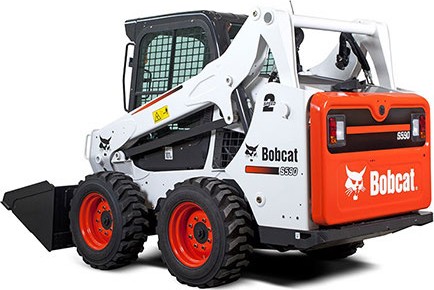
Ask the yard what a skid steer goes out for most and the answer is grading. A backyard that holds water against the house. A driveway being dug out for new gravel. A pad for a shed or a hot tub. A lot that has to be level before the sod truck shows up. It is the job a skid steer is best at, and it is also the one where a first timer can spend a full day pushing dirt around and end up with a lumpier yard than they started with. A few things make the difference.
Pick the machine by the gate, then by the pile
Access decides first. The Bobcat S450 is 59 inches wide and is the one that gets down a side yard. If you have room, the S590 and the 68 inch wide S66 carry more per bucket and are heavier, and a heavier machine cuts and smooths better because it does not ride up over hard spots. For a big open lot or a long laneway with a lot of material to spread, the Case SV280B is the largest we rent.
Ground matters as much as size. Wheels are fine on dry, firm soil and on gravel. On wet clay, on a slope, or across a lawn you would like to still have afterward, a track loader is the better call. We compared the two in skid steer vs. track loader.
Take the smooth bucket
The smooth bucket comes with the machine and it is the grading bucket. The flat cutting edge leaves a clean surface behind it. A tooth bucket is for breaking into hard ground, and it leaves grooves. If the yard is hard packed and has to be loosened first, take both and switch, which takes a couple of minutes. The other buckets and attachments are covered in our attachments guide.
How the grading actually goes
Rough it in going forward. Drive into the high spots with the bucket flat and low, take a thin slice, and carry it to the low spots. Thin cuts, many passes. Trying to take it all at once is how you dig a hole you then have to fill.
Finish it going backward. This is the part nobody tells you. Tip the bucket forward so the cutting edge is on the ground, put the lift arms in float so the bucket rides on the surface under its own weight, and drive in reverse. That is back-dragging, and it is what takes out the ridges and tire marks and leaves the ground flat.
Keep the water moving away from the house. Grade so the ground falls gently away from the foundation and toward wherever the water is supposed to go. Set a couple of string lines or stakes before you start so you are working to something other than your eye.
Check as you go. Get off the machine, walk it, and look at it from the low end. It always looks flatter from the seat than it is.
Two things that ruin a grading day
Mud. Wet clay does not grade. It smears, sticks to the bucket and ruts under the tires, and you finish the day worse off. If it has rained hard, push the rental back a day or two. We would sooner move the booking than send a machine out to a job that cannot be done.
Not knowing what is underground. Grading is shallow, but cutting a high spot down or digging out a driveway base can reach a gas line, a cable or a sprinkler line. In Ontario you request locates through Ontario One Call before you dig. It is free, and it takes a few days, so book it before you book the machine.
Before the float shows up
Know where the material is going. If you are cutting, where does the extra soil end up? If you are filling, have the gravel or topsoil delivered before the machine arrives and dumped where you can reach it. Clear the route in, measure the gate, and move the cars off the driveway. A day rental goes a lot further when the first hour is spent grading, not waiting on a dump truck.
Machines go out by float from the yard on Speers Road in Oakville to Oakville, Burlington, Milton, Mississauga and Toronto, on daily, weekly or monthly rates. Most yards and driveways are a one or two day job. Request a quote, tell us the size of the area, the access and what the ground is like, and we will tell you which machine we would put on it.
